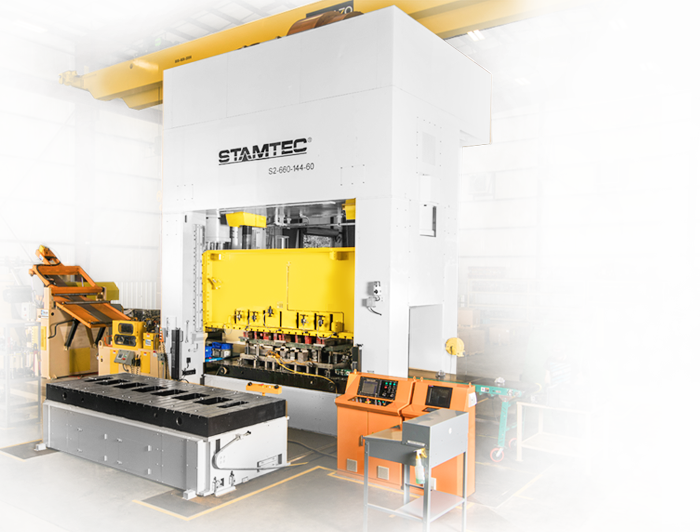
 STAMTEC IN 60 SECONDS:
Mechanical Presses
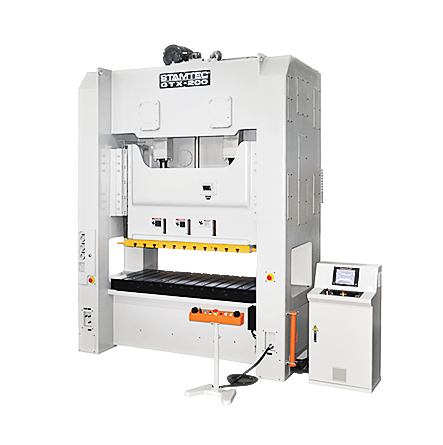
Stamtec’s Mechanical Presses (a.k.a. OBG, OBS, OBI, or C-frame) undergo finite element analysis prior to manufacturing to ensure proper design, superior strength and maximum resistance to deflection
Stamtec's mechanical presses are engineered for manufacturers who demand consistent output, tight tolerances, and long-term dependability. Whether you need a new mechanical press for a high-volume stamping line or a specialized machine for a specific forming application, our presses are built to perform — and are manufactured right here in the United States.
From compact gap frame designs to heavy-duty straight side configurations, Stamtec's mechanical press machines are available in tonnage ranges from 25 to 3,000 tons, with models to match virtually any metalforming requirement. Each press undergoes finite element analysis (FEA) before manufacturing to ensure optimal design, superior strength, and maximum resistance to deflection under load.
Contact us today to learn more about our mechanical press lineup, or Request a Quote to get started.
Stamtec mechanical presses are designed to give manufacturers a measurable competitive edge on the shop floor:
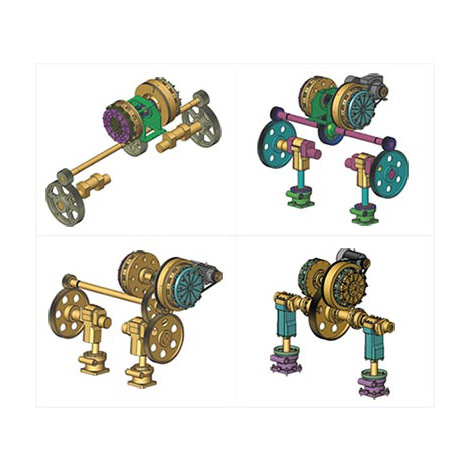
A mechanical press machine uses a motor-driven flywheel to store and release energy through a crankshaft or eccentric gear mechanism, driving the slide downward to form, cut, or shape material. This mechanical pressing action is fast, repeatable, and highly accurate — making mechanical presses the preferred choice for high-production stamping environments.
Stamtec offers two primary frame types to suit different application requirements:
To understand the differences between mechanical and other press types, see our guide: Mechanical Press vs. Hydraulic Press — An In-Depth Comparison.
Stamtec's mechanical presses serve manufacturers across a wide range of industries and production environments:
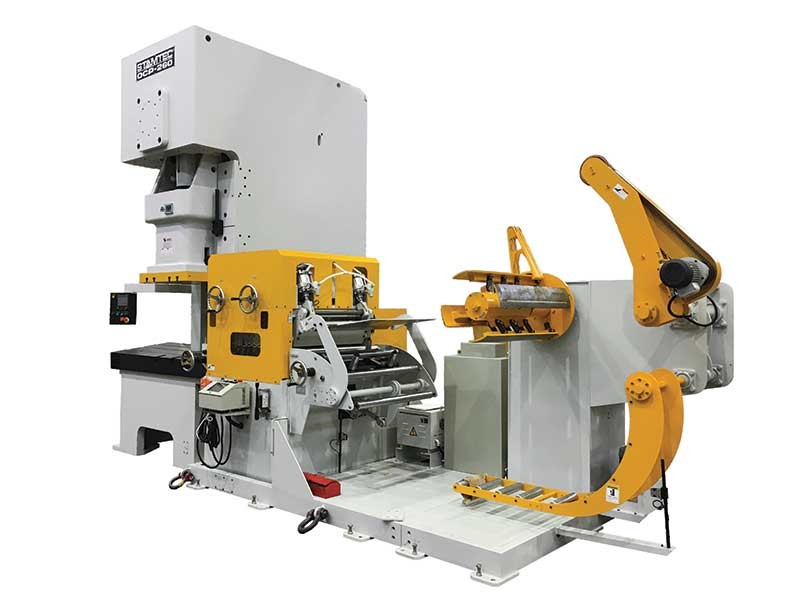
Whether you're running a dedicated transfer line or a flexible job shop operation, there's a Stamtec mechanical press built for your application.
What tonnage mechanical presses does Stamtec offer?
We stock presses ranging from 25 to 600 tons and can provide custom-built mechanical presses up to 3,000 tons for specialized heavy-forming applications.
What is a mechanical press used for?
Mechanical presses are used for stamping, blanking, piercing, forming, drawing, and embossing operations on metal. They are commonly found in automotive, appliance, electronics, and general industrial manufacturing facilities.
What's the difference between a gap frame and a straight side mechanical press?
Gap frame (C-frame) presses have an open front design for easy die access and are well-suited for lighter tonnage applications. Straight side presses have a closed, rigid frame that minimizes deflection under high loads, making them ideal for precision, high-tonnage work.
What specs do I need to determine the right mechanical press?
The key specs to assess are tonnage (press capacity), stroke length, die height, speed (continuous and intermittent), and bed/slide area. Your die builder can help define these parameters before you speak with our team.
Can Stamtec help me determine what type of press I need?
Yes. Once you've worked with a qualified die builder to define your required specs, our team can recommend the right mechanical press configuration for your application. Contact us to get started.
How long does it take to receive a new mechanical press?
Lead times vary by model and configuration. Contact our sales team for current availability and estimated delivery.